Broke, Brilliant, and On the Record: Seven Tiny Films That Punched Way Up
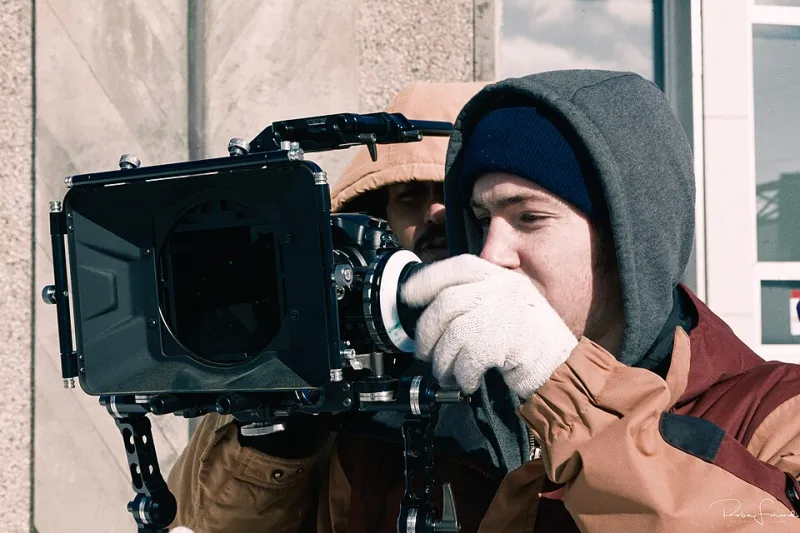
Photo: Joe Haupt from USA, CC BY-SA 2.0, via Wikimedia Commons
There's a certain smugness in pointing out that some of the most beloved American films of the past few decades cost less than a Marvel movie's catering budget. But the point isn't gotcha — it's that each of these films found a workaround so clever it became the movie's whole personality. Limitation, it turns out, is a genre.
Here are seven, each with the trick that made it work.
1. The One-Room Wonder
Plenty of films confine themselves to a single space, but the great ones make the walls mean something. When your entire budget is a location, you learn to treat that location like a character — every corner gets used, every off-screen sound does narrative labor. The lesson: if you can't afford scope, buy depth.
2. The Non-Actor Gamble
Some filmmakers, starved for payroll, cast real people — and accidentally invent a texture no trained performance can fake. Street casting forces you to write for who's actually in front of the camera instead of who you imagined. The awkwardness reads as truth. Audiences can smell the difference.
3. The Expired Stock Aesthetic
Expired film stock, mismatched reels, donated ends of rolls — shooting on what a lab was throwing away gives you grain, color shifts, and vignettes that a colorist would charge thousands to fake. Financial desperation became a look so distinctive that whole movements imitated it on purpose.
4. The Found-Footage Shortcut
Nothing tanks a micro-budget like effects. So some films simply declared the camera itself a character — diegetic, in-world, flawed. Suddenly shakiness is realism, bad lighting is verité, and your $200 camera is the star. It's the single most cost-effective narrative innovation of the era.
5. The Real-Time Trick
If you can't afford coverage, don't cut. Films that unfold in continuous stretches turn a scarcity of editing time into a tension machine — the audience feels the clock because the filmmakers couldn't hide from it either.
6. The Festival Pivot
Some micro-budget films were never designed for theaters. They were designed for programmers — 80-something minutes, one strong hook, a title that fits on a badge. Knowing your actual buyer, not your fantasy buyer, is a distribution strategy disguised as humility.
7. The Pay-It-Forward Crew
The sneakiest trick of all: crews who worked for credit, meals, and the promise of the same favor back. A micro-budget film is really a barter economy with a premiere. The ones that succeed are the ones where everybody left richer in skills than they arrived.
The Takeaway
None of this is a argument against money. Money is lovely. But these films suggest that the interesting question isn't "what would you make with a studio budget?" — it's "what does your limitation want to be?" The locked door you can't afford to open might be the scariest thing in your movie.
And unlike a nine-figure production, you can actually make it this weekend.