The Last Ten Seconds Are Killing Your Short Film
There's a moment in almost every bad short film where the story ends — and then the film keeps going. Not because there's more to say, but because the filmmaker couldn't bear to leave. The scene lingers. The music swells. A final shot restates the theme in case you missed it. And somewhere in a dark screening room in Cleveland or Austin, a programmer quietly writes "overlong" on a scoring sheet.
We need to talk about endings. Not twist endings, not sad endings — the craft of ending at all. Because in short-form cinema, knowing when to stop might be the single most underrated skill a filmmaker can have.
The Programmer's Tell
Talk to enough festival programmers and a pattern emerges. The films that don't make it rarely fail at the beginning. Failures announce themselves in the final two minutes.
"I can usually tell within ninety seconds whether a film is competent," one programmer for a mid-size regional festival told us, asking to remain anonymous because she still reviews friends' submissions. "But whether it's good? That's the last shot. That's where the filmmaker either trusts me or doesn't."
The tells are consistent: a line of dialogue that explains what the images already showed. A montage of reaction shots after the emotional peak. An epilogue nobody asked for. "It's like watching someone finish a sentence and then keep talking," she said. "You stop hearing what they're saying and start noticing that they're nervous."
There's a particular species of this — call it the Sunday-night upload, the short that was finished at 11 p.m. before a deadline and never got the one thing every rough cut needs: a brutal pass on the back end. These films open fine. They close like a door left ajar.
Why We Can't Let Go
The reasons are human. You spent two years on this thing. Your crew gave up weekends. Your lead actor drove four hours each way to shoot in a borrowed farmhouse. Every scene carries a memory, and cutting one feels like amputating a friend.
But the audience didn't make those memories. They only know what's on screen, and on screen, the film ended two minutes ago.
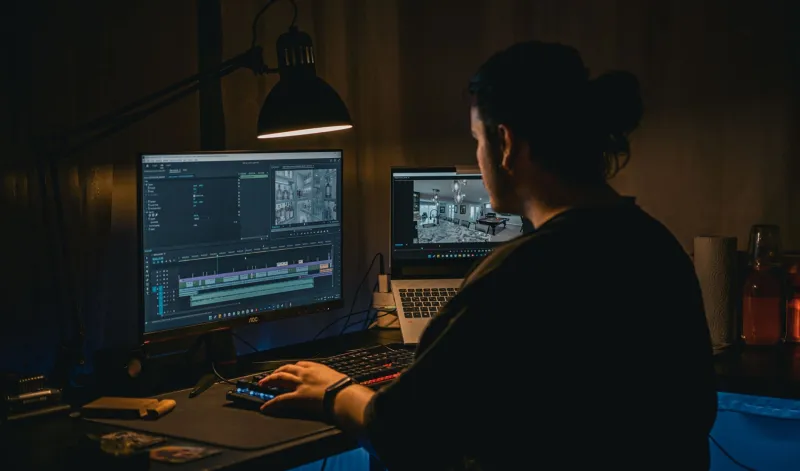
Editors see this from the other side of the timeline. "My job is often just to protect the ending," says a freelance editor in Chicago who works primarily on festival-bound shorts. "Directors will fight for every scene except the one that has to go. So I build two versions — the one they want and the one that ends where it should — and I let them watch them back to back. Nobody's ever picked the long one. Not once."
Her method for finding the natural ending point is refreshingly unromantic: watch the cut with someone who's never seen it, and note the exact moment they reach for their phone or shift in their seat. "The body knows before the brain does. The ending is usually forty seconds before the first fidget."
The Short Film's Odd Advantage
Here's the strange part: shorts are actually freer than features when it comes to endings. Nobody expects a three-act arc in nine minutes. Some of the most celebrated American shorts of the last decade — the ones that graduated from SXSW and Sundance into careers — end abruptly, mid-gesture, on an image that refuses to resolve. They trust the audience to carry the rest home.
That trust is the whole game. A feature can survive a flabby third act on the strength of its performances. A short cannot survive a flabby final minute on anything. There's no runway left. Every second after the true ending is a second the film spends talking over itself.
Think of it like a jazz solo. The best players aren't defined by how many notes they play — they're defined by the spaces they leave and the confidence to stop while the room is still leaning in. Coltrane didn't overstay. Neither should your short.
A Field Guide to Getting Out
So how do you find your ending? Some practical wisdom pulled from the cutting rooms:
Cut the last scene first. As an exercise, delete your final scene entirely and watch the film. You'll be shocked how often it works better. You can always put it back.
End on the cut, not the line. If your last line of dialogue lands the theme, the film should already be over. The image doesn't need to comment.
Beware the lingering shot. Hold your final frame exactly as long as it earns — and no longer. If you're holding it to "let it breathe," you're actually letting it suffocate.
Test with strangers, not friends. Your friends will clap at anything. Strangers fidget, and fidgets don't lie.
Ask what the film owes you. Nothing. You made it. The audience owes you their attention for a few minutes, and the least you can do is give it back on time.
Standing Ovation, Lights Up, Go Home
There's a reason the phrase "leave them wanting more" has survived a century of show business: it's true, and it's hard. The shorts that travel — the ones that get into the good festivals, get shared in group chats, get remembered — all share a certain discipline. They arrive, they say something, and they get out before we've had enough.
That's not restraint for restraint's sake. It's respect. Respect for the audience's time, and respect for your own story, which deserved an ending as sharp as its beginning.
Your short has a natural ending point. It's probably forty seconds earlier than you think. Find it, cut to it, and roll credits while the room is still leaning in.