Five Shorts That Prove Your Phone Was Never the Problem
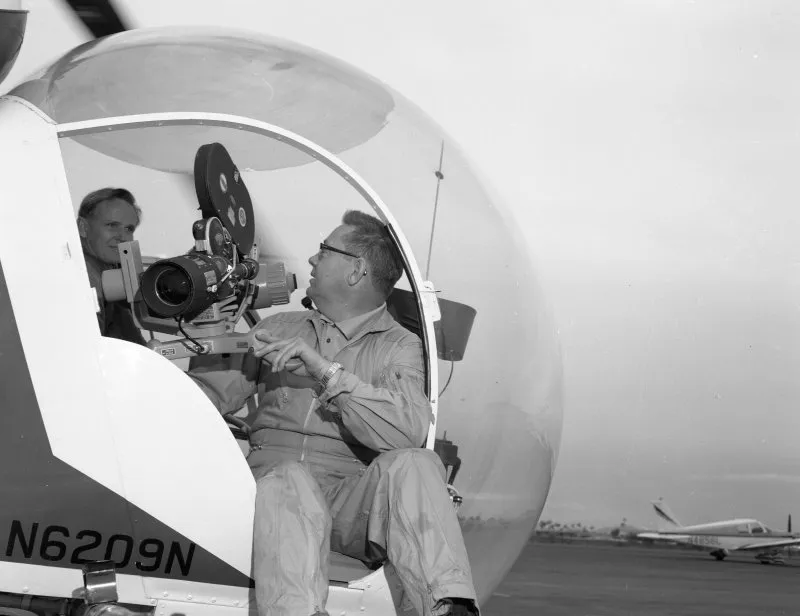
Photo: San Diego Air & Space Museum Archives, Public domain, via Wikimedia Commons
Can we retire the apology? You know the one. The filmmaker stands up after a screening, shuffles their notes, and mutters something like, "Obviously we shot this on an iPhone, so the night scenes are a little rough..."
Stop. Please. You're apologizing for a brush because it isn't a roller.
Here's my argument, and I'll die on this hill: the smartphone didn't lower the bar for indie cinema. It invented a new visual language, and the filmmakers who treat its constraints as grammar—rather than as failures—are making some of the most exciting work in the short form right now. Let's look at five.
1. The Fixed Lens Made Them Move
The best phone-shot shorts share one trait: the camera can't zoom, so the filmmaker has to. One recent festival favorite—a nine-minute two-hander set entirely in a walk-up apartment—built its entire blocking philosophy around this. Characters drift toward the camera to gain importance; the camera drifts toward characters to eavesdrop. Every emotional beat is a physical relocation. It feels choreographed because it had to be. A zoom would've been easier. Easier would've been worse.
Takeaway: Lock your lens. Literally tape it. Watch how your staging gets honest fast.
2. Tiny Sensors, Big Darkness
Small sensors struggle in low light, which is usually framed as a limitation. But one acclaimed horror short from a Chicago-based crew leaned into it hard—shooting at night with available streetlight only, letting faces dissolve into murk. The grain and noise, which a purist would call artifacts, function as dread. You can't see what's at the end of the alley because, on a phone sensor at midnight, you genuinely can't. The audience's eye strains right along with the protagonist's. That's not a compromise. That's design.
Takeaway: If you can't light the dark, cast the dark. Write scenes where not-seeing is the point.
3. The Always-In-Your-Pocket Camera
A documentary-style short about a rural mail carrier in Appalachia earned its intimacy the old-fashioned way: nobody performed for the camera, because the camera was invisible. Try pulling off that unguarded quality with a crew of nine and a C-stand forest. The phone's smallness isn't a technical footnote—it's an ethical position. It changes what people do when you point it at them.
Takeaway: Match your camera's size to your subject's guard level. Some stories only exist at pocket scale.
4. Portrait Mode, Portrait Meaning
Vertical framing is the internet's native aspect ratio, and one experimental short used it without irony: a mother and daughter who never share the frame, each confined to their own vertical strip, texting across the black gap between them. The format is the theme. On a theater screen, letterboxed to hell, it still works—because the constraint was the concept, not an accident of the device.
Takeaway: Don't just tolerate the aspect ratio you have. Interrogate it. What does this frame refuse to show?
5. The Battery Is a Screenwriter
My favorite example is also the silliest: a one-take short shot until the phone died. The crew knew they had roughly forty minutes of battery. The script was built to end when the power did. The final shot—the screen flickering, the image compressing into digital sludge—lands as a formal punchline and a thematic one. Limitations with a deadline are the best story editors money can't buy.
Takeaway: Give your gear a rule it can't break, then write toward the break.
The New Rules, Quickly
If the smartphone era has rules, they read something like this: constraints are style decisions once you claim them out loud. Grain is texture. Fixed lenses are choreography. Small cameras are permission. None of this means craft doesn't matter—it means craft now includes knowing your tool's failures well enough to weaponize them.
The most expensive-looking thing in any frame is intention. Steven Soderbergh shot a feature on a phone. So did the winner of a certain Palm Springs short jury. The phone was never the point either way.
So the next time you catch yourself pre-apologizing at a Q&A, try this instead: tell the audience what the limitation gave you. Then watch them look at your film differently. Because they will. And honestly? They should.