Burn After Screening: The Shorts That Choose Memory Over Metadata
The first rule of the Tuesday night screening at a former dry-goods warehouse in Chicago’s Pilsen neighborhood is that you don’t ask for the link. The second rule is that there is no link.
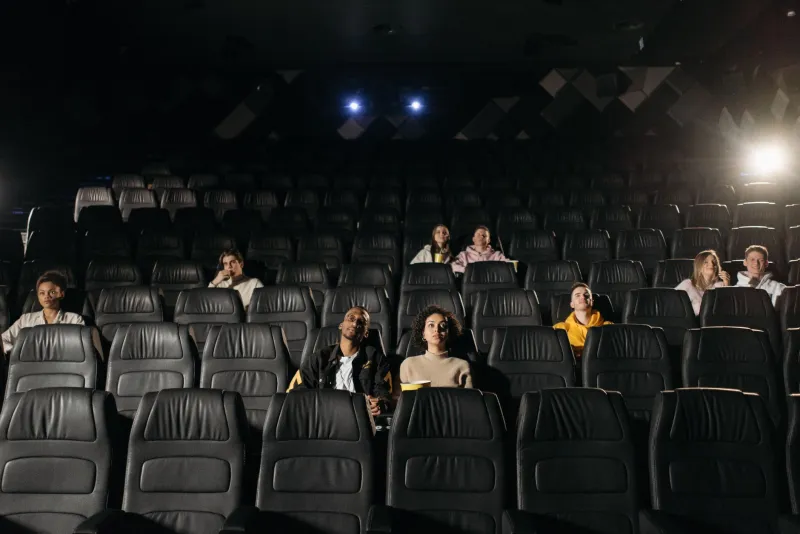
On a cool Tuesday in October 2026, 64 people fold into folding chairs under a single string of bulbs. Phones go into neoprene pouches at the door. The program is a folded photocopy, numbered by hand. For 71 minutes, six short films unspool — a nine-minute drama about a bus driver, a three-minute animated fever dream, an eleven-minute documentary shot on a borrowed camcorder — and then the lights come up, the room exhales, and the films are gone. No QR code. No Vimeo password. No “DM me for the link.”
“People are so conditioned to ask, ‘Where can I watch it?’” says Theo Brant, who runs the series, called The Dark Room, out of the warehouse and a rotating set of borrowed spaces. “I tell them: you just did. That was the watch. That was the only watch.”
Brant is part of a small but growing circuit of US organizers and directors treating the short-film screening as a one-off happening rather than a content drop. The model varies: a backyard in Austin, a former church in Detroit, a rented dance studio in Portland, a 40-seat microcinema above a bike shop in Brooklyn. The throughline is refusal. The film exists in the room, for the people in the room, and then it doesn’t exist in any searchable way.
The Anti-Link Aesthetic
This is not a Luddite gesture. Most of the filmmakers showing work at these events still submit to festivals, still cut trailers, still maintain a website. But they are separating two ideas that the last decade braided together: a film being seen and a film being available.
“I spent 18 months on a 12-minute short and then watched it get four likes on a Tuesday,” says Marisol Vega, a Los Angeles director whose film “Cielo Abierto” screened at a one-night event in Boyle Heights this spring and has not been posted online. “The link was killing the room. People would say they’d watch it later, and later never came. Now they have to be there. It changes how they watch. It changes how I make.”
Vega describes the difference in attention as physical. At a festival, she says, the audience is half-elsewhere — checking the next screening time, the parking meter, the group chat. At an ephemeral screening, the absence of a future viewing creates a kind of pressure. You lean in. You don’t assume you’ll catch it again.
Organizers lean into that pressure. At The Dark Room, Brant programs in a strict order, with no introductions longer than 90 seconds and no intermission. The printed program lists titles and run times but not director bios — those are read aloud, once. At a Portland series called No Copy, founder Priya Raman hands out index cards and pencils before the lights go down. Afterward, the audience writes down what they remember. The cards are collected, read aloud by Raman, and then shredded.
“It sounds precious,” Raman says. “I know. But the first time we did it, people wrote down sounds, not plots. ‘The refrigerator hum.’ ‘The way she held the cigarette.’ That’s the film living in a body instead of a browser tab.”
Designing a Room You Can’t Revisit
Ephemeral screenings are not accidental. They are designed, and the design is half the work.
The first job is trust. Filmmakers have to believe the room is safe — that no one is recording, that the Q&A won’t end up as a grainy vertical video, that the event won’t become a de facto premiere that spoils a festival run. Most series use phone pouches, but the better ones rely on social pressure. Brant’s team asks attendees to sign a short card at the door: “I’m here for the room, not the record.” It’s not a legal document. It’s a mood.
The second job is access. A film that exists only in a room excludes anyone who can’t get to the room. Organizers counter with captions burned into the projection file, ASL interpreters at Q&As, audio description tracks played through headphones, and sliding-scale tickets. Raman’s Portland events reserve a block of seats for disabled attendees and publish a content note in advance — the only thing about the program that travels outside the room.
The third job is the ending. A one-night screening has to land, because there is no second chance. Brant programs the shortest film last. Vega cuts her credits to 20 seconds for live events. Raman ends every night with the same ritual: the audience sits in silence for one minute after the final frame, then the lights come up, then everyone leaves.
“You can’t fake that minute,” Raman says. “Either the room is with you or it isn’t. There’s no algorithm to blame.”
The Cost of Vanishing
There are obvious tradeoffs. A film that isn’t online can’t be discovered by a programmer in another city, can’t be shared by a critic, can’t be assigned in a classroom, can’t be found by the cousin who missed the show. It can’t generate the slow, accidental audience that has kept some shorts alive for years. And it can’t be preserved. When the last screening ends, the only record is in the people who showed up.
Organizers say they hear this constantly. Some have started keeping a private archive — a hard drive in a drawer, a screening copy labeled with gaffer tape — but no public access. Others argue that the loss is the point. “We’re not saying every film should vanish,” Raman says. “We’re saying some films are events. A play doesn’t stream. A dance doesn’t live on YouTube. Why does a short film have to be a file?”
Vega is less romantic. She admits she may post “Cielo Abierto” eventually, after the one-night run ends. But she’s in no hurry. “I wanted one year where the film belonged to the people who sat in the dark with it,” she says. “That’s not a distribution strategy. That’s a relationship.”
What the Room Keeps
Back in Pilsen, the lights are up. The chairs are folding. The pouches are unlocked, and 64 people walk out into the cold with no link to share. A few linger by the door, talking about the bus driver short — the way the camera held on his hands, the sound of the wipers. Brant stands by the exit, saying goodnight, not collecting emails.
“Someone asked me last month if this is a trend,” he says. “I said, no, it’s a room. Trends end. Rooms are where things happen.”
For Happening, that’s the whole argument. Not every short needs to be a secret. But some do. And the ones that are — the ones that burn after screening — leave a different kind of trace. Not a URL. A memory. A night you can’t get back, which is another way of saying a night you actually had.