Fifty Chairs and a Pulse: Why Micro-Cinemas Are Winning on Scarcity

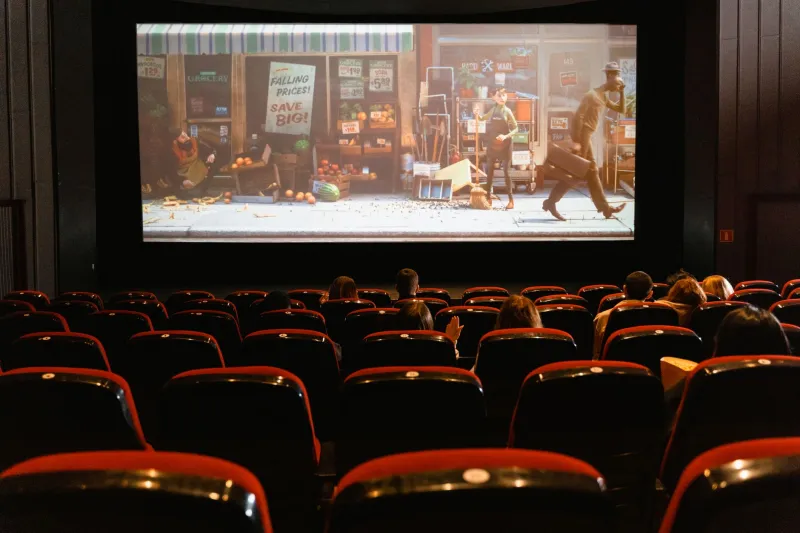
Photo: David Stowell, CC BY-SA 2.0, via Wikimedia Commons
Open the door on a Friday night in Austin, Chicago, or Providence and you might find twenty people in folding chairs, a projector humming against a painted brick wall, and a filmmaker standing by the exit with a laptop and a QR code. This is the micro-cinema promise: no balcony, no bad sightline, no audience member more than five rows from the screen. In 2026, a growing number of U.S. screening series are making that intimacy official by capping attendance at fifty seats or fewer. The cap is not a compromise. It is the business plan.
The math of a room that refuses to scale
A fifty-seat room changes the arithmetic of exhibition. You are not trying to cover a 200-seat lease with 200 tickets. You are trying to cover a modest rent, a projector bulb, insurance, and maybe a stipend for the projectionist with fifty tickets and a little help from memberships, sponsors, or a local brewery that wants its logo on the pre-roll. When the house is small, a sold-out screening is not a blockbuster. It is a sustainable evening.
That math matters for short films. A twelve-minute short in a 200-seat theater can feel like a warm-up act. In a fifty-seat room, it can feel like the main event. The audience is close enough to notice a performance in a glance, a cut that lands a half-beat early, the sound of a room breathing together. Micro-cinemas are not just showing shorts; they are giving them a scale where detail reads.
Pop-up series have learned to borrow that scale. A record shop back room, a church basement, an art gallery with a pull-down screen—these spaces already have personality. The fifty-seat cap keeps the overhead low and the atmosphere high. It also keeps the programming flexible. A micro-cinema can pair a local short with a restored independent feature, host a rough-cut screening, or build a whole night around a single filmmaker without betting the season on one title.
A ritual, not a transaction
Scarcity does something to an audience. When there are only fifty seats, the RSVP means something. The waitlist means something. The no-late-seating policy is not cruelty; it is a contract. You are not buying a ticket to a content delivery system. You are accepting an invitation to a room.
That contract changes behavior. People arrive early. They stay for the Q&A. They talk to the person next to them because the person next to them is close enough to talk to. Micro-cinemas tend to program fewer screenings and promote them harder, which means the audience is not scrolling through forty showtimes and picking one. They are choosing an event. The room becomes a character in the evening, and the audience becomes a cast of regulars.
For filmmakers, this is the useful part. A fifty-seat screening will not impress a distributor with its grosses. It can impress an audience with its attention. The Q&A is not a distant panel; it is a conversation. The filmmaker can see who laughs, who leans forward, who leaves early. That feedback is worth more than a thin crowd in a big house.
Booking a tour in 2026
The micro-cinema model rewards a different kind of festival tour. Instead of chasing the largest available room in every city, filmmakers are building regional clusters: three screenings in the Pacific Northwest, four in the Midwest, a weekend in the South. The goal is not to hit every market. The goal is to hit the rooms where your film can actually breathe.
That means asking different questions when you book. Does the venue have a projection setup that respects your aspect ratio? Is there a built-in audience for shorts, or are you the experiment? Will the venue split the door fairly, and can they explain the split in plain language? A fifty-seat room with a loyal mailing list can outperform a 200-seat room with a rented audience. The cap is a feature because it forces everyone to be honest about capacity, marketing, and expectations.
It also gives filmmakers a story to tell. A screening that sells out at fifty seats feels like demand. A screening that fills fifty seats in a 200-seat theater feels like a problem. The micro-cinema model turns the same number into a different signal. For a short film trying to build word of mouth before a larger festival run, that signal matters.
The room as a signal
The fifty-seat rule is not a universal cure. Some films need a big screen and a big crowd. Some towns do not have a micro-cinema, and some micro-cinemas do not have the staff to handle a tour. The model works when the venue has a point of view and the filmmaker is willing to meet it halfway.
But the appeal is clear. In a year when every platform is fighting for the same scroll, a room with fifty chairs is offering something platforms cannot: a finite, shared, unskippable experience. The audience cannot pause the film. The filmmaker cannot hide behind analytics. Everyone is in the same room, breathing the same air, watching the same cut.
That is not nostalgia. It is strategy. Micro-cinemas are betting that intimacy is not a niche preference but a durable pleasure. For filmmakers booking a 2026 tour, the lesson is simple: do not ask how many seats you can fill. Ask which fifty people you want in the room.