Book the Elks Lodge: The Case for Premiering Your Short Where Nobody Works in Film
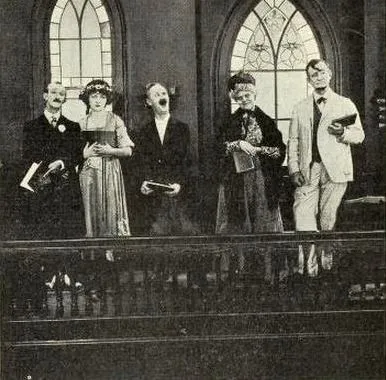
Photo: Mack Sennett Comedies / Associated First National, Public domain, via Wikimedia Commons
There is a particular kind of silence that happens in a festival screening room when the film before yours ends and the audience of programmers, publicists, and other filmmakers does that tight, professional clap. It is not a bad sound. It is just a small sound. And in 2026, with submission fees stacking up and laurels losing their currency, it is worth asking whether your short's first real audience should be a room full of people who are already tired of watching shorts.
The alternative is not a consolation prize. It is a 120-seat theater two towns over, a university auditorium with a projector that has seen better days, or the Elks Lodge on a Tuesday night with a borrowed sound system and a folding table for the sign-in sheet. It is the hometown premiere, and it might be the best opening night your film ever gets.
The Room Does Not Need a Red Carpet. It Needs a Reason to Exist.
The first mistake filmmakers make with a local premiere is trying to make it feel like a festival. You do not need a step-and-repeat. You do not need a host in a borrowed tuxedo. You need a venue that feels like it matters to the people walking into it.
Start with the single-screen cinema. There are still hundreds of them across the U.S., and many will rent you a Tuesday or Wednesday night for less than the cost of three festival submission fees. Call the manager. Do not send an email into the void. Ask about a four-wall rental, what comes with it, and whether they have a projector and sound system you can test beforehand. Ask what they charge for a concession minimum. Ask if they will let you bring in a local band for the lobby before the show. The answer is often yes if you ask like a neighbor instead of a customer.
If the cinema is booked, look at the regional art house, the university auditorium, the library meeting room, the community center, the church basement with the good piano. Each one changes the texture of the night. A college room brings a younger crowd and a sharper Q&A. An Elks Lodge brings grandparents, neighbors, and a bar. A library brings the quietest audience you will ever hear during a dialogue scene. Choose the room that fits the film, not the room that looks most like a festival.
Budget for the boring stuff. Insurance, if the venue requires it. A backup HDMI cable. An adapter for the one laptop that will inevitably show up. A friend at the door with a list. A friend at the sound board who knows how to bring the levels down when the Q&A gets shouty. The glamour is in the film. The work is in the cables.
Your Guest List Is Not the Film Industry. That Is the Point.
The beauty of a hometown premiere is that nobody in the room is doing you a professional favor. They are there because they are curious, because they know your parents, because the local paper ran a photo of the shoot, because the high school AV club has decided you are a big deal. That is a different kind of attention. It is honest in a way that a festival audience is not.
Marketing to that crowd means throwing out the industry language. Do not put a logline on the flyer. Put a sentence: 'A 14-minute movie made here, with people you might know.' Say the run time. Say when the doors open. Say there will be a Q&A. Say the venue has a bar or does not. Make the poster look like something you would actually stop to read on a coffee shop bulletin board, not something designed for a film market.
Partner with the places that already have local trust. The town paper still loves a local-kid-makes-good story. The college radio station will interview you for 15 minutes and play your soundtrack between songs. The high school AV club will show up if you offer to talk to them after. The diner will put a postcard in the window if you buy a coffee and ask nicely. None of this scales like a paid ad, but it stacks. A hometown premiere is not a marketing campaign. It is a rumor that becomes a room.
Make It a Show, Not a Screening.
The difference between a vanity screening and an event is about 30 minutes of hosting. Open the doors early. Play a playlist that means something to the film. Have someone at the front thank the venue by name. Introduce the film in under two minutes. Watch it with the audience, not from the lobby. Then do a Q&A that includes the crew, not just the director. The sound person has better stories than you do. The location scout has better stories than anyone.
Keep the night short. A 12-minute short, a 20-minute Q&A, and an hour of hanging around in the lobby is a full evening. Do not program three other shorts because you feel bad about the run time. Do not make a speech about your festival strategy. The audience came for the film and for the feeling of being in a room together. Give them both.
The Aftermath Is the Real Distribution.
When the lights come up, the night is not over. Put a QR code on the back of the program that leads to a mailing list. Ask people to write down the name of one person they would bring to a second screening. Take photos of the crowd, the marquee, the line at the door. Those photos are not vanity. They are evidence. A sold-out 120-seat theater in a town with one screen is a better press kit line than 'Official Selection' at a festival nobody outside the industry has heard of.
Then do it again. Book a second screening in the next town over. Submit to regional festivals with the local premiere as your proof of audience. Send the programmer a note that says the film played to a full house in a town where the theater usually closes on Tuesdays. That is a story. That is word of mouth. That is the thing that festival laurels are supposed to represent but often do not.
In 2026, the coast will still be there. The festival rat race will still be expensive. But the Elks Lodge will only hold that date for so long. Book it. Put up the postcards. Test the sound. Your short does not need a red carpet. It needs a room that is glad it showed up.