House Lights, Open Heart: The Festival Q&A as Second Act
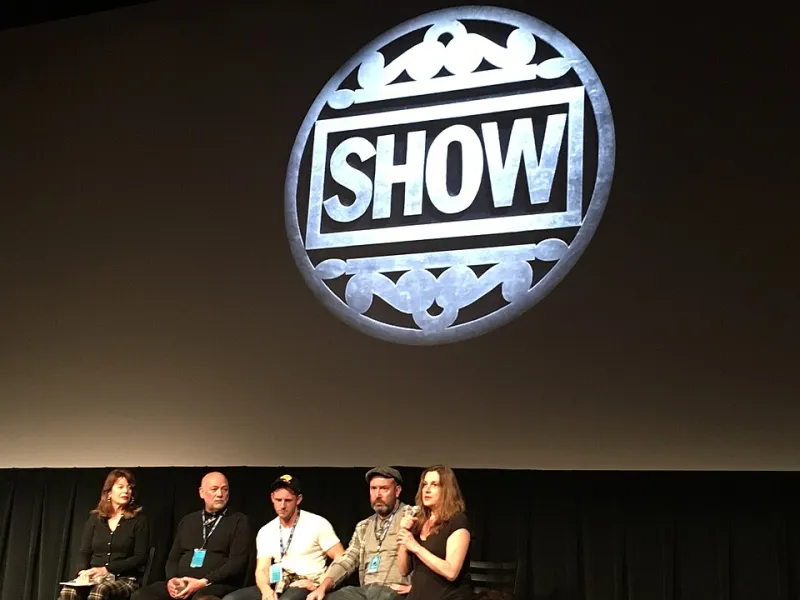
Photo: Jennifer 8. Lee, CC BY-SA 4.0, via Wikimedia Commons
There is a moment, right after the last credit, when a short film stops being a file and becomes a room. The projector is still warm. Someone in the back row is still holding their breath. The festival volunteer with the clipboard steps into the aisle, and the microphone makes that little pop. And just like that, the movie you just watched gets a sequel — unscripted, underlit, and entirely live.
We talk about exhibition as if it ends with the final frame. But anyone who has sat through a festival weekend knows the truth: the Q&A is not the epilogue. It's the second act. Sometimes it's the better act. And it's almost never just a panel.
The Film Gets Re-Edited in Real Time
A Q&A is the only screening where the audience can reach into the film and rearrange it while it's still humming. A question about the ending can make a room reinterpret the whole short. A confession about the budget can turn a polished piece into a miracle. A blunt "Why did she stay?" can expose a wound the filmmaker thought they'd hidden in the subtext.
That's not a bug. It's the form. The movie is fixed; the conversation is not. The best moderators know this and treat the mic like a live edit suite — asking one question that opens the film up rather than pinning it down. The worst ones treat it like a press conference, and the room can feel the difference within thirty seconds. You know the type: three minutes of preamble, a question that's really a speech, and a filmmaker nodding politely while the audience checks their phones.
Preparing for a Room You Can't Rehearse
Filmmakers prep for Q&As in all kinds of ways. Some write index cards. Some practice a single story in the shower. Some bring a producer whose only job is to catch the "how much did it cost?" grenade and toss it back as "less than a used car, more than a good dinner." The preparation isn't about having answers. It's about staying open when the room asks something you didn't expect.
The most common advice — "just be yourself" — is also the least useful. A better version: decide what you're willing to be honest about. The budget? The shoot that almost collapsed? The actor who quit two days before? You don't owe anyone your diary, but you do owe the room a pulse. Audiences can smell a canned answer. They can also smell a real one.
And if you're moderating, the job is not to show off your own read of the film. The job is to hand the mic to the person who made it and then get out of the way. A good moderator asks the question everyone is thinking but phrasing it so the filmmaker has room to breathe. A great moderator knows when to stop asking.
The Question That Changes the Afterlife
Here's where the Q&A gets weird and wonderful: it can reshape a short's afterlife. A single question can give a filmmaker language for their own work. "Is this about grief?" someone asks, and suddenly the film has a genre, a hook, a way to describe itself at the next festival, the next grant application, the next pitch. The Q&A is often the first place a short learns how to talk about itself.
It can also connect the film to the exact person who needs it. I've watched a stranger ask a question that turned into a collaboration. I've watched a programmer in the third row ask something that turned into a slot at another festival. The Q&A is the indie film economy's most casual networking event, disguised as a conversation. Nobody has to hand out a business card. They just have to raise a hand.
When It Works, It Feels Like Group Therapy
The best Q&As I've sat through didn't feel like panels. They felt like the room exhaling together. Someone laughs too loud. Someone cries a little. Someone asks a question that's really a confession — "I made a short about my father too, and I never showed him" — and the filmmaker nods like they've been waiting for it.
That's the thing about independent film: the audience is often the same size as the crew. The distance between the people on screen and the people in the seats is thin. A Q&A doesn't create that intimacy. It just makes it visible. And when it lands, you can feel the whole room agree to be a little more honest than they were ten minutes ago.
House Lights, Open Heart
So the next time the lights come up, don't reach for your coat. Stay for the second act. Ask the question that's been sitting in your chest since the first shot. Watch what happens when a film stops being finished and starts being alive.
The credits are not the end. They're the invitation.