The Graveyard Shift Auteurs: Making Movies While America Sleeps
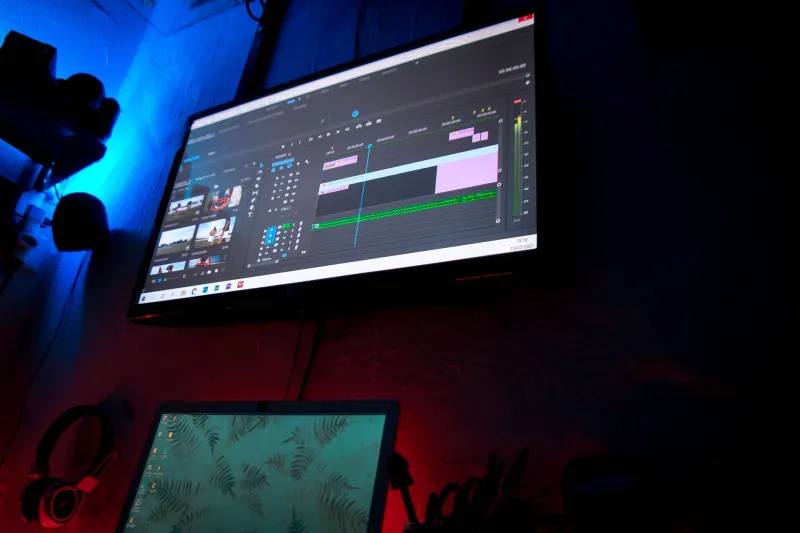
There's a particular kind of silence at 3 a.m. that no soundproofed mixing stage can replicate. It's the silence of a kitchen table in a rented apartment in Columbus, a laptop humming through a timeline, and a director-editor who has to be at their desk job in four hours. If you've never been there, it might sound miserable. If you have, you know it's also where some of the most personal independent films in America get made.
We spoke with five working filmmakers — an ER nurse in Chicago, a high school teacher outside Austin, a graphic designer in Portland, a paralegal in Queens, and a warehouse shift supervisor in Reno — all of whom finished substantial projects while holding down forty-hour weeks. Their hours differ. Their rituals, burnout patterns, and stubborn devotion are eerily similar.
The Timeline Is a Second Job You Don't Get Paid For
"I treat the edit like a night shift," says Dana Okafor, the Chicago nurse, who cut her documentary over eleven months of post-shift sessions. "Clock in, clock out. Two hours minimum, four nights a week. If I wait until I feel inspired, the film never gets finished."
That discipline-first mentality came up in every conversation. When your creative window is two stolen hours after a ten-hour shift, inspiration is a luxury. Routine is the engine. Several of our interviewees described their process in almost manual-labor terms: logging footage during lunch breaks, exporting rough cuts overnight so notes are waiting in the morning, color grading on weekends when their eyes were freshest.
The practical hacks are worth stealing, whatever your day job looks like:
- Batch by brain-load. Cutting requires judgment; syncing audio doesn't. Save the mechanical tasks for exhausted weeknights, the big structural decisions for Saturday mornings.
- Render while you work. Overnight exports turn your day job into your render farm's babysitter.
- Keep a decision journal. At 1 a.m., you will make choices you'll regret. Write down what you were trying to solve so morning-you can evaluate it soberly.
- Protect one full weekend day. Every filmmaker we spoke to guarded one uninterrupted block like it was sacred. It's where the real progress happens.
Burnout Is Not a Plot Twist — It's the Third Act
Nobody romanticized it. The teacher from Austin described a two-month stretch where he didn't touch his film at all after a brutal semester. "I thought I'd lost it," he says. "Turns out I was just tired. The film was fine. I was the one who needed a break."
The pattern our interviewees kept describing: push hard for months, hit a wall, feel like a fraud, rest, come back. The ones still making films had learned to treat the wall as part of the schedule, not a personal failure. The paralegal in Queens put it bluntly: "The film has survived worse than me taking three weeks off. Films are patient. Employers are not."
There's also a quieter cost nobody budgets for — the social one. Weddings skipped, friendships maintained on a text-message basis, partners who learned to read the difference between "I'm editing tonight" and "I'm hiding tonight." Two of our five credited a specific person — a spouse, a best friend — as the unsung co-producer of their film.
What the Margins Give Back
Here's the strange part: almost everyone we talked to said the day job made the work better. Not in a toxic "suffering is good for art" way, but structurally. Limited hours force ruthless decisions. You can't shoot forty setups when you have forty minutes. You can't keep a flabby second act when every edit session costs you sleep.
"My film has no fat because I physically had no time for fat," says the Reno supervisor, who finished a 22-minute narrative short over eighteen months. "If I'd been full-time on it, I'd have indulged myself into oblivion."
The nurse put it another way: her night shifts taught her to work while the world sleeps, and that translated directly to the edit bay. "Hospitals never close. Neither does my timeline. I stopped waiting for perfect conditions around year two."
The Finish Line Looks Different Out Here
For most of these filmmakers, there was no wrap party, no festival premiere with a Q&A. The end of the edit was a Tuesday. One exported a final master at 5:40 a.m., closed the laptop, showered, and went to work. "I sat in my car in the parking lot and cried a little," the Portland designer told us. "Then I went inside and made slides for a client meeting."
That's the reality of indie post-production in America right now — unglamorous, self-funded, stitched together in the margins. And yet the films keep coming. They arrive at festivals with no IMDb trivia about their production, no viral behind-the-scenes threads. Just finished work, made by people who decided that a movie was worth their nights.
If you're in the middle of one of those edits right now — coffee gone cold, eyes burning, day job in six hours — take this as your sign. The film doesn't need your whole life. It just needs your next two hours.