Ninety Seconds, No Safety Net: The Art of the Accidental Pitch

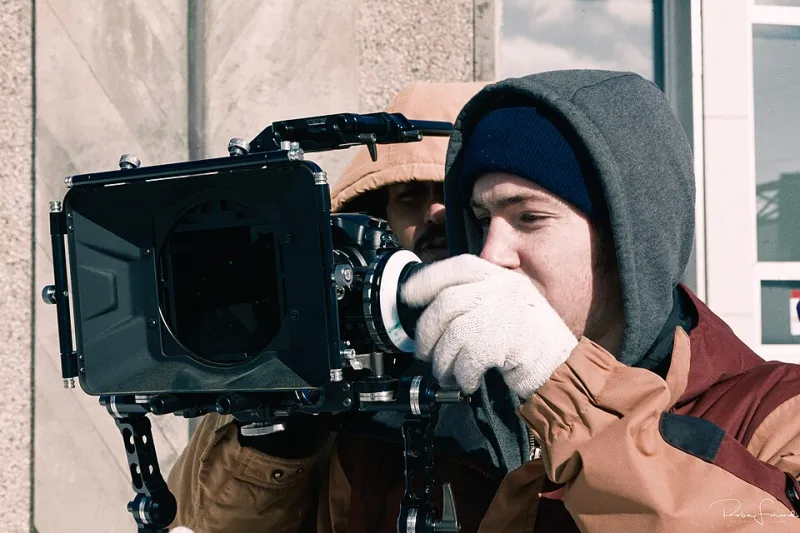
Photo: Ajairapara, CC BY-SA 4.0, via Wikimedia Commons
Here's a fun fact nobody puts on the festival panel: most of the deals that happen at Sundance don't happen at Sundance. They happen at a house party in Park City, over warm beer, between two people whose names each other barely know. The film itself? Maybe it screened that afternoon. Maybe it screens tomorrow. Maybe it never screens at all. What matters is the ninety seconds that just occurred between a filmmaker with a laptop full of dreams and a producer with a business card and a low threshold for boredom.
We wanted to understand what actually happens in those ninety seconds. So we asked. A lot.
Nobody Wants Your Logline. They Want Your Obsession.
The first thing everyone we spoke to agreed on: the classic logline—the tidy one-sentence summary you drilled in screenwriting class—is table stakes, not the meal.
"A logline tells me what the movie is about," says a programmer at a mid-sized regional festival who asked to stay anonymous because, in her words, "I still have to work this town." "What I'm actually listening for is why this person had to make it. That's the thing that doesn't survive a bad pitch. You can fake a premise. You can't fake obsession."
Her advice: don't memorize a script. Memorize the moment the idea grabbed you, and tell that story instead. "If you light up, I lean in. If you recite, I check my phone. It's that simple."
The Anatomy of a Sticky Pitch
We broke down a handful of pitches that actually worked—conversations that turned into meetings, meetings that turned into money—and the pattern is almost embarrassingly consistent.
The first fifteen seconds are about the person, not the project. Producers invest in people they want to be stuck in a distribution trench with. Leading with your film's third-act twist is like proposing on the first date.
One concrete image beats three abstract themes. "It's about grief and gentrification" is fog. "It's about a woman who keeps her dead husband's food truck running even though she can't drive stick" is a movie.
You end before they want you to. Every single veteran we talked to said some version of the same thing: the pitch that gets the follow-up meeting is the one that leaves a hole. Say the image, say where you are in the process, say the title twice, and then—this is the hard part—stop talking.
Field Notes from the Trenches
One filmmaker we'll call Dana (she asked us to, and honestly it's a good name for it) landed her first feature's financing at an afterparty in Austin during SXSW. Her pitch, as she remembers it, was eleven words long: "My mom drove a school bus for thirty years. This is her heist movie."
"He'd been cornered by four people before me," she laughs. "I think he was just relieved I mentioned a bus."
The lesson isn't that brevity wins—it's that specificity does the selling. A school bus. Thirty years. A heist. The producer she pitched later told her the sentence "ran a movie in his head before I finished my beer." That's the whole game. You're not pitching a project. You're installing a movie in someone else's head and letting it play.
Where the Pitch Actually Happens
Forget the elevator. The real venues, ranked by our totally unscientific survey of festival veterans:
- The coffee line at 8 a.m. — Everyone's guard is down and caffeine hasn't kicked in. Prime territory.
- The walk between venues. You have a captive audience and a built-in exit strategy. When the conversation ends, you just... keep walking.
- The Q&A after someone else's screening. High risk. If you pitch in the room, everyone remembers you as the person who pitched in the room. If you catch the filmmaker after, though, and their producer is standing nearby? Magic.
- The smoking patio. Even if you don't smoke. We don't make the rules.
Practice Like It's a Fight
The filmmakers who thrive at festivals treat the pitch like a physical skill, not a personality trait. They rehearse in the car. They pitch their friends' films to strangers to get reps without the stakes. One producer told us she asks young directors to pitch her their movie in the time it takes an elevator to go four floors—and then again in the time it takes to go two.
"The two-floor version is the one that matters," she says. "If I like the two-floor version, I'll ask for ten floors."
So the next time you're standing in a festival line, badge lanyard sweaty against your neck, and someone asks what you're working on—don't reach for the logline. Reach for the bus. Reach for the one image that made you insane enough to make this thing in the first place.
Ninety seconds. No safety net. Go.