One Roll, Zero Rescues: The Uncut Short as a Director’s Calling Card
There is a particular sound in a festival theater when a one-take short is working: nobody moves. Not because the audience has been told to sit still, but because the film has quietly convinced everyone that a single wrong step will bring the whole thing down. At a packed screening during the 2026 festival season, an eleven-minute uncut short played like a held breath. No cutaways. No rescue in the edit. Just a camera, a handful of actors, and the low hum of collective anxiety. When the end credits finally rolled, the room exhaled together.
That is the promise of the continuous-shot short, and it is having a moment again. Not as a viral stunt, though the format certainly lends itself to clips that make people ask, “Wait, was that all one take?” The better reason is craft. For independent directors, the uncut short has become a calling card: a compact, unforgiving demonstration of control. It says you can block a scene, choreograph a camera, work with actors, solve sound problems in real time, and land an ending without the edit doing the heavy lifting.
The Gimmick Is the Point—Until It Isn’t
Let’s be honest: one-take films can be showy. The format announces itself. Audiences know they are watching a tightrope act, and that awareness can pull focus. The worst versions feel like technical demos with dialogue attached. The best ones use the constraint to create something the cut would ruin—compression, intimacy, the sensation of being trapped inside a moment that refuses to release you.
That is why the current wave feels different from a simple TikTok challenge. Filmmakers are not just hiding cuts or bragging about take counts. They are using the unbroken image to put pressure on a character, a room, a conversation. A one-take short can make a small apartment feel like a pressure cooker. It can turn a walk to a corner store into a slow-motion disaster. It can make an awkward family dinner feel like a hostage situation. The camera never blinks, so neither does the audience.
Why the Format Fits the Micro-Budget Moment
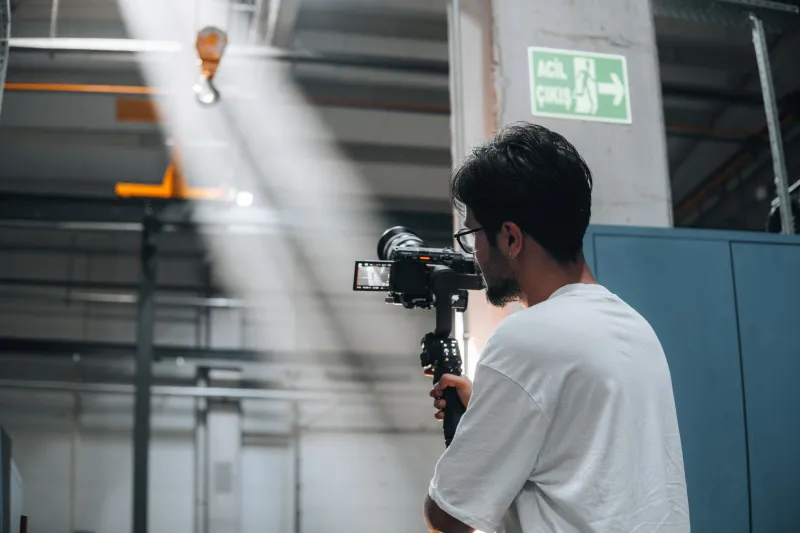
Part of the resurgence is practical. Affordable gimbals, better phone sensors, compact LED lights, and lightweight wireless audio have made long, moving takes more achievable for crews without a truck full of gear. A filmmaker can rehearse in a real location, block with a phone, and shoot with a small enough footprint to stay invisible in a public space. The barrier to entry is lower, even if the execution is not.
But the bigger shift is economic. Short films are expensive to shoot in days, not dollars. Every setup costs time, and time is the line item that sinks micro-budget productions. A one-take short can be planned around a single location and a tight cast. It can be shot in a weekend. It can be lit for 360 degrees, rehearsed until the choreography is muscle memory, and captured before the crew burns out. The trade-off is merciless: there is no coverage to save you in post. You either get it, or you go again.
“We treated rehearsal like editing,” a Los Angeles-based director told me after a 2026 festival screening. “Every move was written down. Every pause was timed. By the time we shot, the camera was another actor.” That is the mental shift the format demands. You are not gathering footage. You are staging a small live performance for a lens.
The Terror Budget
The technical workarounds are where the romance meets the sweat. Sound is usually the first crisis. Long takes mean booming from awkward angles, hiding lav mics under wardrobe, or building a room around what the microphone can actually hear. Lighting becomes a geography problem: practical lamps, bounced sources, and motivated pools of light that let the camera spin without revealing the trick. Blocking becomes choreography. Actors learn camera paths. Crew members learn to disappear behind doors, columns, and couches.
Then there is the take itself. A one-take short does not fail in post. It fails in the moment, with everyone watching. That can be terrifying for a first-time director, but it can also be galvanizing. The set becomes a team sport. Everyone knows there is no coverage, no safety net, no “we’ll fix it in the edit.” The stakes are legible, and that clarity can sharpen a production in ways a comfortable shot list never does.
A Calling Card With a Pulse
For programmers, the appeal is obvious. A strong uncut short is memorable in a lineup of beautifully cut, carefully covered films. It gives an audience something to talk about on the walk out of the theater. For directors, it offers a compact proof of skill: can you sustain tension, guide performances, and keep the frame alive without the edit bailing you out?
But the format should never be a dare. The question is not “Can we do this in one take?” The question is “Does this story need to be trapped in a single unbroken moment?” When the answer is yes, the result can feel like pure cinema—immediate, risky, and alive. When the answer is no, the take becomes a party trick. The filmmakers getting it right in 2026 understand the difference. They are not shooting without cuts to show off. They are shooting without cuts because the cut would let the audience off the hook.
And in a crowded festival landscape, that is a powerful thing: a short that refuses to look away, and an audience that cannot either.