The Quiet People: Inside the Closet Studios Where Indie Sound Gets Made

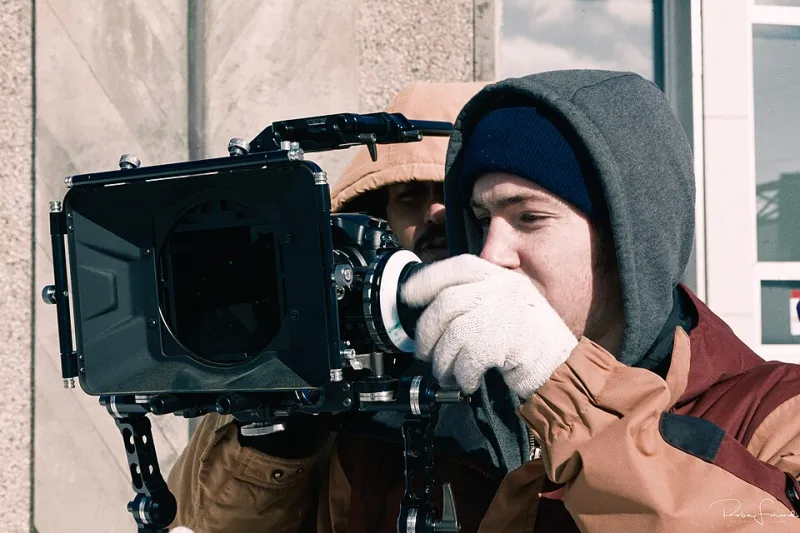
Photo: British Government, Public domain, via Wikimedia Commons
Nobody applauds sound design at a premiere. The credits roll, the crowd cheers for the director, and somewhere in that scroll of names is a person who spent 200 hours making a $4,000 film sound like it had a budget ten times larger. This piece is for them—the quiet people.
Why Sound Is the Cheatest Cheat Code in Indie Film
Here's an uncomfortable truth about low-budget cinema: audiences will forgive a soft image. They'll forgive a boom in the frame. They will not forgive dialogue they can't understand. Bad sound reads as amateur within seconds; bad lighting reads as "moody."
Which means sound is the highest-leverage craft on a micro-budget set. A skilled sound person with $800 of gear can close the gap between your film and a studio release faster than any other department.
The Apartment Studio Playbook
We spoke with several working sound designers who mix festival films out of bedrooms and converted closets. Their techniques cluster around a few principles.
Treat the room, not just the signal. Acoustic panels are nice; a closet full of hanging clothes is free. One designer records all ADR narration inside a packed wardrobe, blanket-fort style. The result: vocals with zero boxy reverb, captured for the cost of a blanket.
Capture clean on set, fix nothing later. The consensus trick list: lav mics hidden in wardrobe as backups to the boom, a dead cat on every mic for outdoor wind, and a 30-second room tone recording after every setup. That last one saves entire scenes. Editors call it the cheapest insurance in filmmaking.
Build worlds from junk. That creature's wet snarl? A rotting watermelon and a microphone. The creaking farmhouse? A cheap wooden chair, mic'd close. Foley on a micro-budget is less about gear and more about a willingness to stand in your kitchen at 1 a.m. slapping celery.
Mix for laptops and phones. Festival films get seen on every screen imaginable. The pros check their mix on earbuds, a phone speaker, and a laptop before calling it done. If the emotional beat survives a phone speaker, it survives anything.
Three Films That Prove It
The barn-burner. A rural thriller that played the regional festival circuit last year carried its entire tension in sound—distant trains, wind through boards, a furnace that hums just below hearing. The director admitted the script never mentioned any of it. The sound designer invented the atmosphere on a $300 field recorder, and reviewers wrote about the film's "oppressive atmosphere" without realizing they were describing one person's headphone sessions.
The two-hander. A dialogue-heavy drama shot in a real apartment with no money for post sound. The fix: every line of dialogue was replaced in a treated closet, matched with recorded room tone, and mixed with aggressive compression to sit perfectly consistent. What should have been the film's biggest weakness became its calling card—two performances, crystal clear, nothing between you and the actors.
The silent short. A near-wordless piece whose sound design won a jury prize. Every footstep, paper rustle, and breath was recorded and placed by hand. The filmmaker's note in the program: "We had no money for locations, so we built the location in your ears."
Start Here
If you're making your first film, budget for sound before you budget for the crane shot. Buy a decent recorder and a shotgun mic. Record room tone like it's a religious obligation. Learn a free EQ and compressor inside and out.
And if you're an aspiring sound designer? There's never been a better time. Every micro-budget film on the circuit needs you, and the barrier to entry is a closet, a blanket, and obsessive ears.
The image gets the eyes. But the sound gets the heart—and on a $5,000 budget, that's the whole game.