The Room Is a Character: Notes on Choosing Where Your Film Lives
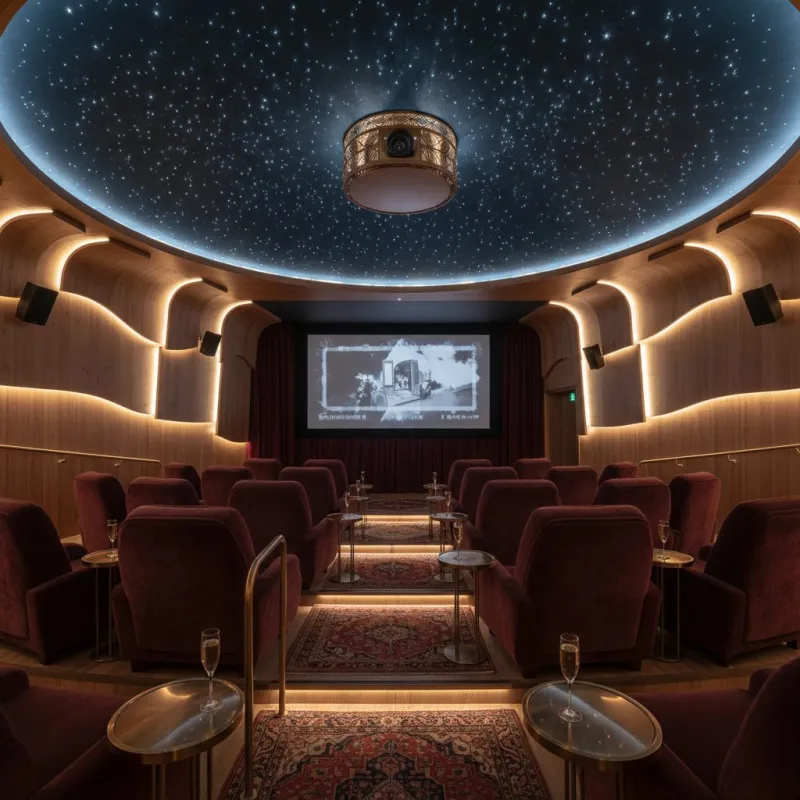
Photo: small intimate independent movie theater interior with vintage seats and projector light, via obrazki.ai
There's a moment every indie filmmaker knows. You've locked the cut. You've color-corrected until your eyes betray you. And then someone asks the question that actually determines how your film will be experienced: so, where's it playing?
We tend to treat that question as logistics. Venue as container. Four walls, a projector, a bunch of folding chairs. But after spending the last few months talking to the people who run America's smallest, strangest, most devoted screening rooms, I've come to believe something heretical: the venue is not the container. It's the co-author.
Forty Seats Change Everything
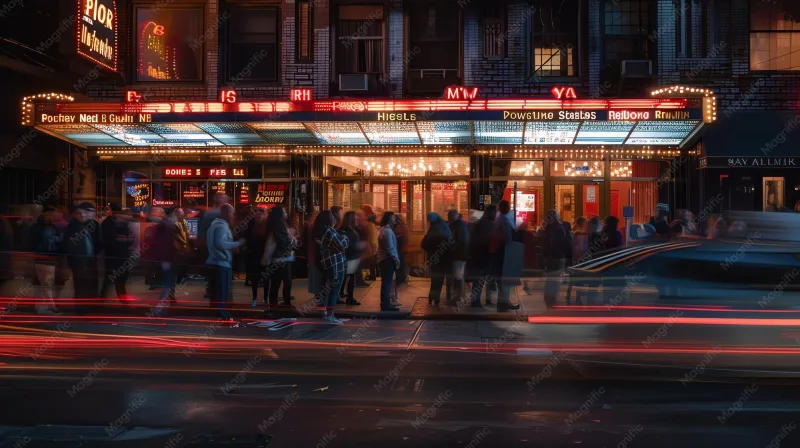
Walk into a 40-seat microcinema — think of the little storefront operations sprouting up in Portland, Philadelphia, Albuquerque — and notice what's absent. No concession lobby drowning out the dialogue. No 20-minute ad gauntlet. No stranger scrolling their phone two rows down under the glow of exit signs.
What you get instead is proximity. You can hear the person next to you breathe during the quiet parts. Which means the filmmaker can afford quiet parts.
"We program the room as much as the film," one microcinema operator told me, asking to stay nameless because, in her words, "the room has a reputation, not me." Before every screening she dims the house lights in three stages, not one — a slow exhale into darkness. She picks the pre-show music the way an editor picks a sound bridge. "If someone walks in agitated, I've already lost. The room has to lower their heart rate before the film asks anything of them."
That's curation. Not of movies — of conditions.
The Repertory House as Time Machine
Then there's the repertory house — the single-screen survivors, the 1920s movie palaces with water-stained ceilings and projectionists who still splice reels. Programming a noir revival in a room where a thousand people once smoked cigarettes through matinees does something no streaming algorithm can replicate. The walls have watched. You can feel it.
A programmer at a beloved second-run house in the Midwest put it to me this way: "I don't schedule films. I schedule evenings. A 35mm print of a 1974 paranoia thriller hits different when the audience is mostly film students, the print has cues burned in, and the seat creaks every time someone leans forward. That creak is part of the movie now."
Part of the movie. Sit with that. We obsess over frame rates and LUTs and then hand our film to whatever room happens to be available, as if the environment were neutral. It never is.
Rooftops, Garages, and the Weather Report
And the rooftop screening? Wind noise, city hum, a screen flapping in the breeze — objectively worse delivery, subjectively unforgettable. Watching a low-budget romance under actual open sky, with the actual temperature matching the temperature on screen, collapses the distance between representation and reality. Your audience isn't watching a couple fall in love on a summer night. They're in a summer night.
Yes, someone's phone will ring. Yes, a siren will interrupt your third act. The rooftop screening is imperfect by design, and that imperfection is the point. It says: this is happening with you, not at you.
Treat the Space as Part of the Text
Here's my argument, plainly: cinephiles should read venues the way we read cinematography. Ask what the room is saying. A ghost story in a creaky converted firehouse means something different than the same ghost story in a multiplex with stadium seating and a pretzel smell. Same film, different text.
And filmmakers: when you're booking your premiere, stop asking only "how many seats?" Ask:
- What does this room do to silence? (Your quiet film may need a quiet room, not a big one.)
- What happens before and after? (Lobby conversations are the post-credit scene of live cinema.)
- What does the audience see when they walk in? (First impressions start at the door, not frame one.)
The house lights coming down isn't the start of the experience. It's the middle of it. Everything before — the walk over, the ticket, the seat hunt, the stranger next to you — is the opening act.
Independent cinema has always been about intimacy under constraint. The venue is where that intimacy either happens or doesn't. So choose your room like you chose your ending shot. Deliberately. Because the audience won't remember your aspect ratio.
They'll remember where they were when the lights went down.