The Inbox Is a Film Too: What Festival Programmers Notice Before the Final Twelve
Photo: festival programmer laptop spreadsheet film submissions screening room headphones, via i.pinimg.com
The room where short films get sorted is usually not a room. It is a laptop on a kitchen table in Los Angeles, a shared spreadsheet open in a browser tab, a pair of headphones that have seen better days. One programmer I spoke with calls it the inbox film: the movie you make for the selection committee before they ever meet the movie you made for an audience. It is not the movie you shot. It is the movie your submission materials, your first ninety seconds, and your sound mix announce you have made.
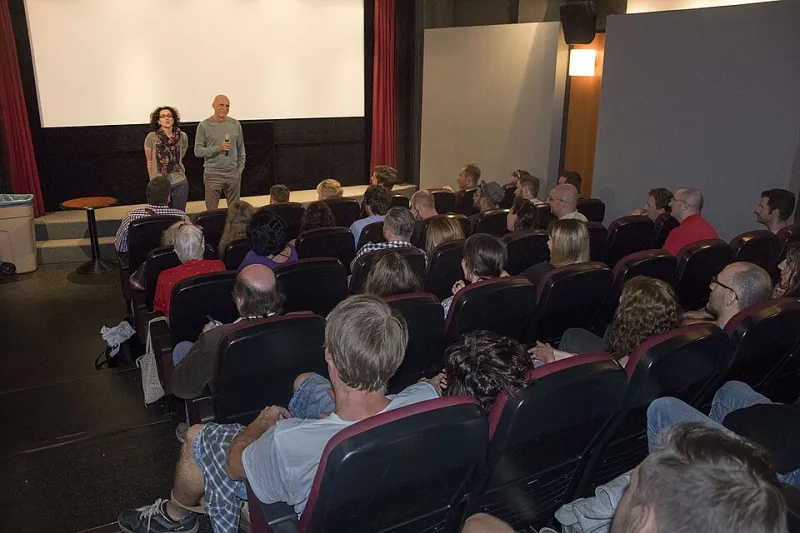
That distinction matters when the numbers are absurd. A midsize US festival might receive 888 short-film submissions for twelve slots. A Brooklyn micro-festival might get 300 for eight. A genre event in the Pacific Northwest might get 1,200 for a handful of late-night blocks. The programmers are not villains in a hidden room. They are tired people with day jobs, screening links, and a deadline that does not care about your director’s statement.
The First Pass Is a Reading Test
The first pass is not really a judgment of taste. It is a reading test. Programmers are scanning for signal: Does the first page of the submission form tell me what this is? Does the runtime match the story? Is the sound intelligible? Is the film in the category it claims? One programmer described her process as looking for a reason to keep watching. That sounds harsh until you realize the alternative is looking for a reason to stop. Both are forms of triage. The first is just more generous.
What gets past the first pass is often not the most ambitious film. It is the most legible one. A clear logline helped. A runtime under fifteen minutes helped. A clean export helped. A film that opened on a face, a room, or a problem helped more than a three-minute drone shot over a city. The programmers are not anti-beauty. They are pro-momentum. They are watching at 11 p.m. after a full day of work, and the film that respects that reality has an advantage.
What Quietly Kills Momentum
The killers are rarely dramatic. Muddy dialogue is a killer. A title card that sits too long is a killer. A submission link that requires a password and three clicks is a killer. A filmmaker who uploads a trailer instead of the film is a killer. So is a film that says it is a comedy but opens with a funeral, or a film that says it is a drama but spends four minutes establishing a vibe. Programmers are not asking for genre purity. They are asking for truth in labeling.
One programmer told me about a short that was genuinely beautiful and genuinely doomed because the first two minutes were dark, quiet, and untethered from any character. She kept watching. She liked it. But she had forty more films to screen that night, and the film had not given her a reason to recommend it to the other two committee members. That is the quiet part: a film can be good and still lose momentum in a pile. The pile is not a festival audience. The pile is a sorting mechanism.
The Notes That Never Reach You
Most filmmakers imagine the notes as a verdict. They are usually shorthand. Programmers write things like strong opener, sound issue, lost me at 6, charming but thin, or not for us. Those notes are not a diagnosis. They are a memory aid. They are written for a meeting, not for a filmmaker. By the time the final twelve are chosen, the notes have done their job: they have helped a committee remember which film was which. They are not a letter you were meant to read.
This is why rejection emails feel so blank. The blankness is not cruelty. It is triage. The programmers cannot write 876 personalized critiques, and even if they could, most of those critiques would be unfair to the film you actually made. A first-pass note is a snapshot of a tired person at a laptop. It is not a career assessment. It is not a review. It is a sorting mark.
The Final Twelve Are Not the Best Twelve
The final twelve are the best twelve for that festival, that year, that committee, that runtime block, and that audience. They are not the best twelve short films in the world. They are not even the best twelve in the inbox. They are the twelve that survived the sorting room and then fit together into a program. That is a different kind of selection. A brilliant seven-minute film can lose to a very good twelve-minute film because the block needs a closer. A hilarious short can lose because the festival already has two comedies. A quiet film can lose because the Saturday night audience wants noise.
Programmers know this. Filmmakers often do not. The misunderstanding is not that filmmakers are naive. It is that the submission process hides the context. You see a portal and a fee. The programmer sees a spreadsheet, a calendar, and a room full of people who have agreed to sit together in the dark. The film has to work in both places. The inbox is a film too, but it is a different film.
What to Do With This
Do not make a film for the sorting room. Make the film you need to make. But do make the submission package for the sorting room. Cut a clean export. Write a logline that tells the truth. Check your sound on laptop speakers. Label the genre honestly. Put the film first, not the trailer. Respect the runtime you claim. Those choices are not selling out. They are craft. They are the same choices you make when you want an audience to stay with you after the first ten seconds.
The final twelve are not a mystery. They are a compromise between art, time, and context. The programmers are not gatekeepers in a tower. They are people with headphones and a deadline, trying to find the films that will make a room feel alive. The 888 is not a wall. It is a crowd. And the films that get through are the ones that remember the crowd is made of tired, hopeful people who want to be taken somewhere. That is not a secret. It is just the job.