The Laugh Test: What Comedy Shorts Know That the Fest Circuit Forgot
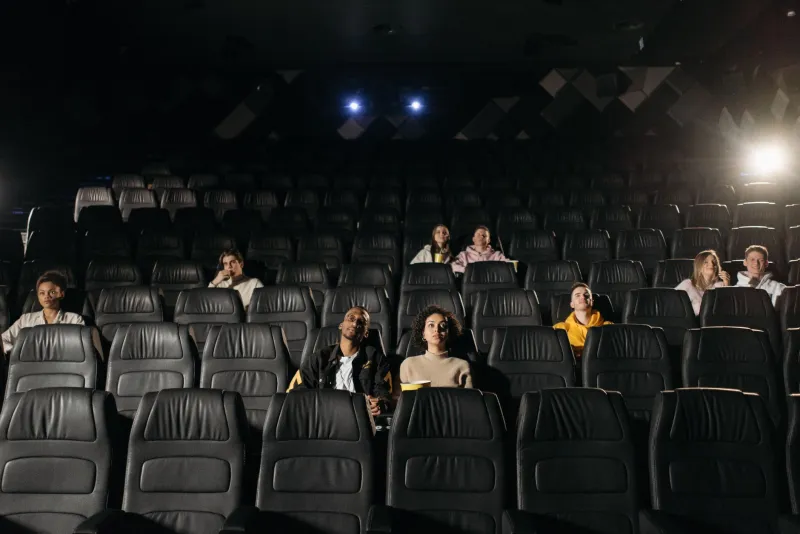
There is a specific sound a festival audience makes when a comedy short finally lands in a block of heavier work. It starts as a nervous half-chuckle, the kind people give a film when they're not sure they're allowed to enjoy it. Then the next joke hits, and the room loosens. Shoulders drop. Somebody in row four laughs too loud and doesn't apologize. By the end, the applause has a different texture—relieved, a little giddy, like the audience just got away with something.
That sound is not a lesser form of cinema. It's the whole point of sitting in a dark room with strangers.
And yet, if you've spent any time reading festival programs, you know the pattern. Blocks lean moody. Loglines lean issue-driven. The comedy short is often the one slotted at the end of the night, or the one nobody quite knows how to describe without the word "quirky." Comedic filmmakers get told their work is "fun"—as if fun were a minor achievement, a garnish on the real business of art.
This year, as 2026 submissions open and programmers start building their stacks, it's worth asking why the fest circuit treats laughter like a risk instead of a craft.
The Room Is the Co-Star
Comedy is a collective form. You can watch a joke alone on your laptop and appreciate the writing, the timing, the performance. But you don't feel it the same way. Laughter is contagious in the most literal sense; the brain rewards the sound of other people cracking up. A comedy short in a full theater is not the same film it is on a phone. It's louder, riskier, and more alive.
That's an argument for comedy shorts, not against them. They are built for the exact conditions festivals claim to celebrate: a room, a crowd, a shared clock. When a programmer puts a funny short in front of the right audience, the film does something no streaming algorithm can replicate. It turns a screening into a room full of people who just survived something together.
The Bias Isn't Malice. It's Friction.
Most programmers aren't sitting around blackballing jokes. They're building arcs. They're thinking about flow, tone, and how a block will land at 7 p.m. versus 10 p.m. And comedy is harder to pair. A drama about a dying parent can sit next to a drama about a lost job. A comedy about a disastrous wedding can clash with almost everything. Programming is curation by adjacency, and comedy often gets treated as the odd one out.
There's also a shorthand problem. "Issue-driven" has become a kind of quality signal in festival marketing, a way to tell audiences the film matters. Comedy gets framed as a palate cleanser, a warm-up, a chaser. But funny films can be just as formally ambitious, just as emotionally precise, just as interested in the mess of being alive. The difference is that comedy asks the audience to trust the filmmaker through laughter rather than silence. That's not a lower bar. It's a different one.
Funny Is Not the Opposite of Serious
Watch a great comedy short and count the craft. The timing is engineering. The sound design is doing half the work—the pause before the punchline, the ambient noise that makes a deadpan land. The performances are calibrated to the frame, not to a laugh track. The edit is ruthless. Comedy is high-wire work, and it falls apart faster than drama when any one element is off.
So when a filmmaker says their short is funny, they're not saying it's slight. They're saying it's precise. The fest circuit could stand to hear that more clearly.
Don't Sand the Joke Off Your Materials
If you're submitting a comedy short this year, the worst thing you can do is apologize for it in your materials. Don't call it "quirky" if it's absurd. Don't bury the premise in a logline that sounds like a drama with a smirk. Put the funniest, most specific thing about the film in the first sentence. Programmers read fast; give them the laugh on the page.
Same goes for your trailer. A 40-second cut that leads with mood and saves the joke for the end is a drama trailer. If your film is funny, prove it early. And make sure your captions and sound mix respect the timing—accessibility shouldn't mean flattening the rhythm that makes the joke work.
Then submit with intention. Comedy festivals, genre festivals, and general fests with a comedy block are obvious. But also look for programs that pride themselves on tonal range. A programmer who wants variety is your ally. Tell them what your film does to a room.
Program Your Own Laugh Track
You don't have to wait for a festival to test the comedy. Put the short in front of a live audience—a bar night, a micro-cinema, a friend's loft with too many folding chairs. Watch where the laughs land and where they don't. Comedy is the most honest form to screen rough because the silence tells you everything. Then take that knowledge back into the edit, the trailer, the pitch.
The fest circuit is built on gatekeepers, but laughter isn't. It's built on rooms. If you can make a room laugh, you already have the thing festivals say they're looking for: proof that cinema is a shared experience, not a solitary scroll.
What the Circuit Forgets
A festival program that never makes room for comedy is not a serious program. It's an incomplete one. Grief and silence are part of the human record, but so is the moment a room full of strangers decides to laugh together. That moment is not a break from the art. It's the art working.
So here's the case for comedy shorts in 2026: they are not the light stuff at the end of the night. They are the test of whether the room still trusts itself. And when a filmmaker gets that laugh, they've done something harder than making an audience cry. They've made them feel safe enough to be ridiculous together. That's not a garnish. That's the whole meal.